-
Shop
- Advanced Technologies
- AI Career Advantage Collection
- AI Skills Mastery 2026 Collection
- Best-Sellers
- Car Accessories
- Dating & Social Skills
- Digital Resources
- AI & Technology
- Beauty
- Budgeting & Saving
- Emotional Intelligence
- Entrepreneurship & Business Growth
- Financial Independence
- Financial Mindset & Psychology
- Goal Setting
- Home Styling & Organization
- Kitchen & Recipes
- Leadership
- Mindfulness
- Mindset
- Motivation
- Online Business
- Parenting & Child Development
- Personal Style & Fashion
- Pet Lifestyle & Wellness
- Positive Thinking
- Productivity
- Self Confidence
- Sleep Improvement
- Stress Management & Relaxation
- Wellness
- Yoga & Mind-Body Practices
- Education & Learning
- Family & Parenting
- Fashion
- Furniture
- Gadgets
- Health & Beauty
- Health & Wellness
- Home & Garden
- Kids & Babies
- Lighting
- Luxury Brands Collection
- Patio, Lawn & Garden
- Personal Growth
- Pet Care
- Pet Supplies
- Pets
- Sport & Outdoors
- Travel
- Wealth
Smart Squat Training Bundle: 3-Day Routine for Toned Legs
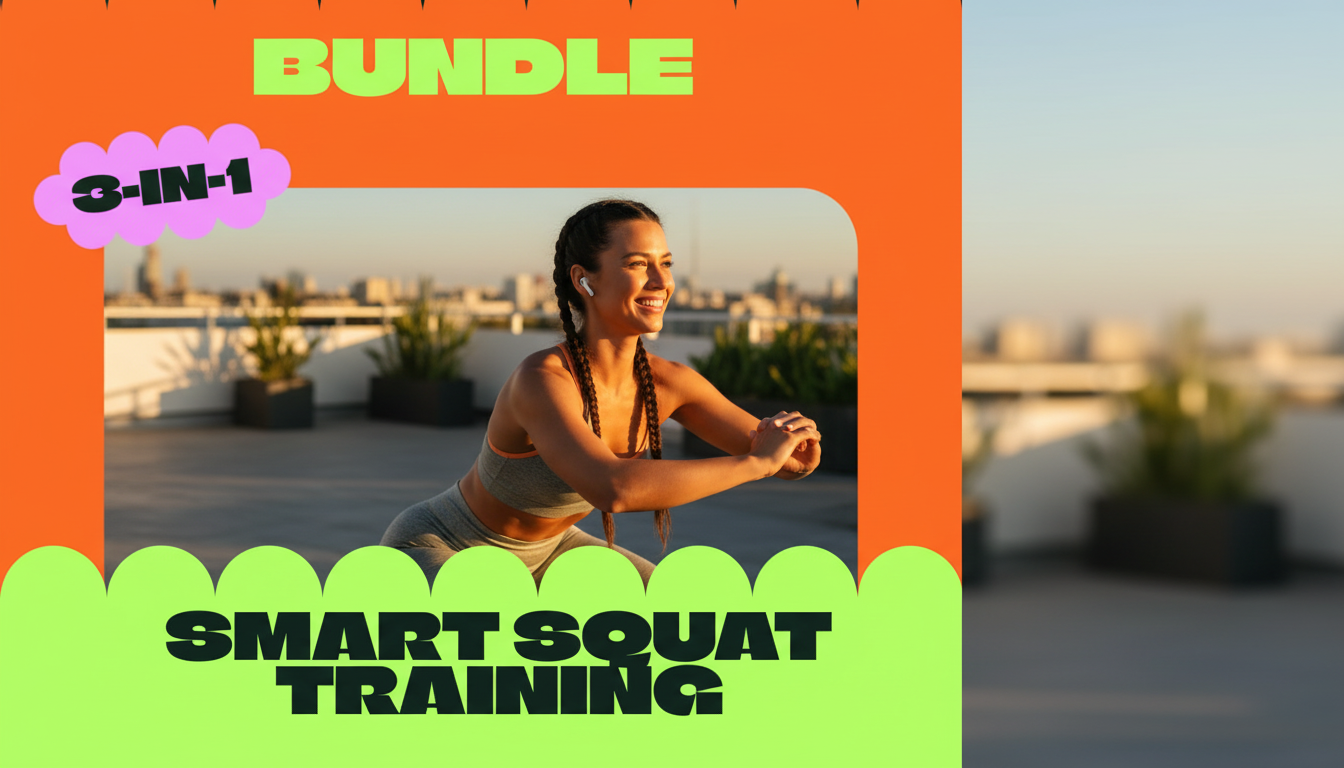
The Smart Squat Training Bundle: Squat Workout Routine, eBooks & Guides for Toned Legs
A focused squat plan can shape the legs and glutes faster when the basics are organized: clear technique cues, sensible progression, and a weekly structure that balances hard sessions with recovery. This guide breaks down how to use The Smart Squat Training Bundle to build stronger squats, support toned legs, and stay consistent—whether training at home or in the gym.
What the bundle is designed to help with
- Build a repeatable squat practice with a routine that removes guesswork.
- Improve leg and glute development through progressive overload and better movement quality.
- Reduce “random workout” fatigue by following a plan that tells what to do and when to do it.
- Support safer training by emphasizing setup, depth control, bracing, and recovery.
- Make training measurable with simple tracking for reps, load, tempo, and perceived effort.
These goals line up with widely used resistance-training progression concepts (including gradual increases in training stress over time) discussed by the American College of Sports Medicine (ACSM progression models) and broader evidence on strength training’s benefits for health and function (NIH overview).
Who this works best for (and who should modify)
- Best fit: beginners to intermediate lifters who want a structured squat-centered leg plan.
- Time-efficient trainees who prefer 2–4 lower-body sessions per week rather than daily workouts.
- Home gym users who need substitutions (goblet squat, split squat, tempo work) when heavy barbells aren’t available.
- Modify if: knee, hip, or low-back pain is present—use reduced range, slower tempo, and less load while addressing mobility and technique.
- Pregnancy/postpartum or post-injury: get clearance and use a coach/clinician-approved variation and intensity.
How to get better squat results: the “smart” training principles
- Progressive overload without rushing: add reps first, then load, while keeping form consistent.
- Consistency beats intensity spikes: aim for repeatable sessions and steady increases over weeks.
- Technique first: stance, bracing, and foot pressure create better force and reduce compensation.
- Volume and recovery balance: more isn’t always better—legs need enough weekly work plus sleep and nutrition to adapt.
- Specificity with variety: keep one main squat pattern while rotating accessories to address weak points.
If the goal is toned legs, the “secret” is simple: train the primary patterns hard enough to grow and strengthen, then recover well enough to repeat quality sessions. For a practical primer on programming for strength and hypertrophy, the NSCA’s education resources are a solid reference point (NSCA training articles).
A simple weekly structure to follow (example plan)
- Pick a main squat variation for the month (back squat, front squat, goblet squat) and keep it consistent.
- Use two squat-focused days and one accessory day for most schedules; add a fourth day only if recovery is strong.
- Keep 1–2 reps “in reserve” on most sets; push closer to failure on accessories rather than the main squat.
- Track: sets × reps × load, plus a quick note on depth, bar speed, and how the set felt.
- Deload every 4–6 weeks by reducing sets or load to maintain momentum and joint comfort.
| Day | Main lift | Accessory work | Notes |
|---|---|---|---|
| Day 1 (Strength) | Squat 4–6 sets × 3–6 reps | Romanian deadlift 3×6–10; calf raise 3×10–15 | Longer rest; prioritize bracing and consistent depth |
| Day 2 (Hypertrophy) | Tempo squat or paused squat 3–5×6–10 | Split squat 3×8–12/side; hamstring curl variation 3×10–15 | Shorter rest; controlled eccentrics for leg tension |
| Day 3 (Glutes + Athleticism) | Goblet squat or front squat 3–4×8–12 | Hip thrust 3×8–12; lateral band walk 2–3×15–25 steps | Focus on glute lockout and stable knees/feet |
Form checkpoints that make squats feel stronger (and look better)
- Foot setup: keep a stable tripod (big toe, little toe, heel) and avoid collapsing inward.
- Brace: inhale into the torso, tighten the midsection, and keep ribs stacked over hips.
- Descent: control down; keep knees tracking roughly in line with toes rather than diving inward.
- Depth: use the deepest range that stays pain-free and controlled; improve depth gradually with mobility and lighter loads.
- Ascent: drive the floor away, keep chest and hips rising together, and avoid shifting onto toes.
Common plateaus and quick fixes
Warm-up and mobility that support better squat sessions
Making toned legs realistic: training + recovery habits that matter
Small details help you repeat good sessions. Even simple, stable footwear for daily steps and recovery walks can make staying active easier—if you want an everyday option, consider Clarks Women’s Black Lace-Up Shoes for a secure, lace-up fit.
Using the bundle effectively: a step-by-step setup
For a streamlined way to apply all of the above—weekly structure, cues, and progression—start with The Smart Squat Training Bundle and commit to one main squat pattern for a full month before swapping variations.
FAQ
How many days per week should squats be trained for toned legs?
For most people, 2–3 squat-focused sessions per week is the sweet spot for results without beating up recovery. A simple approach is one strength day, one hypertrophy/tempo day, and an optional accessory-focused day if soreness and performance stay under control.
Can this routine work without a barbell?
Yes. Use goblet squats, split squats, and tempo or paused reps to keep the sets challenging, then progress by adding reps, slowing the lowering phase, or increasing load with dumbbells/kettlebells when available.
How long does it take to see noticeable changes in legs and glutes?
Many trainees notice measurable strength gains and early shape changes in about 4–8 weeks, especially with consistent training and adequate protein. Bigger visual changes take longer, so tracking loads, reps, and monthly measurements helps you see progress clearly.
Recommended for you


Was this article helpful?
Yes
No








Leave a comment