-
Shop
- Advanced Technologies
- AI Career Advantage Collection
- AI Skills Mastery 2026 Collection
- Best-Sellers
- Car Accessories
- Dating & Social Skills
- Digital Resources
- AI & Technology
- Beauty
- Budgeting & Saving
- Emotional Intelligence
- Entrepreneurship & Business Growth
- Financial Independence
- Financial Mindset & Psychology
- Goal Setting
- Home Styling & Organization
- Kitchen & Recipes
- Leadership
- Mindfulness
- Mindset
- Motivation
- Online Business
- Parenting & Child Development
- Personal Style & Fashion
- Pet Lifestyle & Wellness
- Positive Thinking
- Productivity
- Self Confidence
- Sleep Improvement
- Stress Management & Relaxation
- Wellness
- Yoga & Mind-Body Practices
- Education & Learning
- Family & Parenting
- Fashion
- Furniture
- Gadgets
- Health & Beauty
- Health & Wellness
- Home & Garden
- Kids & Babies
- Lighting
- Luxury Brands Collection
- Patio, Lawn & Garden
- Personal Growth
- Pet Care
- Pet Supplies
- Pets
- Sport & Outdoors
- Travel
- Wealth
Montessori Pretend Cooking Set: Wood & Silicone Play
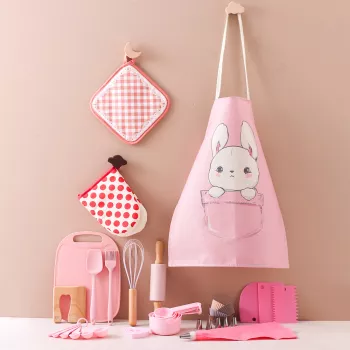
Montessori Wooden & Silicone Kitchen Playset for Girls – Pretend Cooking Toy Set
A pretend kitchen set can do more than fill playtime—it can build everyday skills like sequencing, careful handling of tools, and cooperative play. This wooden-and-silicone playset is designed for hands-on “real life” role play with tactile pieces that encourage sorting, matching, and imaginative cooking scenarios. For more guidance, see Toys for Three-Year-Old Boys They Will Definitely Like.
What makes this playset different
Some pretend food sets lean heavily on one material and one “right” way to play. This set is built for variety and repeat use, with pieces that feel different in the hands and invite children to create their own routines. For further reading, see 2025 Non-Toxic Toys Guide – Gimme the Good Stuff.
- Combines sturdy wooden pieces with soft silicone components for varied sensory feedback
- Supports practical-life style play: prepping, “cooking,” serving, and clean-up routines
- Encourages open-ended scenarios (restaurant, family dinner, picnic) rather than one fixed game
- Helps develop fine-motor control through grasping, stacking, fitting, and pretend cutting/serving motions
- Invites social skills practice: taking turns, sharing roles, and using polite table language
If you’re shopping for a gift that feels “classic” but still engaging, the Montessori Wooden & Silicone Kitchen Playset for Girls – Pretend Cooking Toy Set is an easy pick for everyday role play at home or in a classroom-style play corner.
Skills children practice during pretend cooking
Pretend cooking naturally mirrors real-life sequences—choose ingredients, prepare them, serve, and clean up—so kids get a meaningful reason to repeat actions until they feel confident.
- Fine-motor development: pinching, placing, aligning, and controlled hand movements
- Language growth: naming foods, describing textures, and narrating steps (“first… then…”)
- Early math concepts: counting items, comparing sizes, grouping ingredients, and simple “recipes”
- Executive function: planning a meal, remembering steps, and staying focused through a sequence
- Social-emotional learning: cooperation, empathy (“Do you want more?”), and confidence through mastery
Play researchers consistently point to the developmental value of open-ended, child-led play. For a helpful overview, see NAEYC’s resource on the importance of play in healthy child development.
What’s included and how to use each piece
A simple setup can make pretend cooking feel calm and focused, especially for kids who do best with a defined workspace.
- Set up a consistent play area with a tray or mat to define the workspace and reduce clutter
- Rotate a few items at a time to keep play fresh and prevent overwhelm
- Add simple prompts: “Can you make breakfast?” “Can you prepare a snack for a teddy?”
- Practice gentle handling and putting items back to build tidy-up habits
- Pair with real-life routines: washing hands before “cooking,” setting a table, serving, then cleaning up
At-a-glance guide to play components
| Component type | Material feel | How it supports play | Simple activity idea |
|---|---|---|---|
| Food pieces | Firm, easy to grasp | Sorting, pretend prep, vocabulary building | Sort by color or “meal” (breakfast/lunch/dinner) |
| Kitchen tools/accessories | Mixed textures | Role play and sequencing | Make a 3-step “recipe” (pick, prepare, serve) |
| Silicone parts | Soft, flexible, tactile | Sensory exploration and safe pretend handling | Match items by shape; talk about soft vs. hard |
| Wooden parts | Smooth, stable | Stacking, arranging, realistic feel | Set up a pretend shop with “display” rows |
Choosing the right age range and play style
“Best age” depends less on a number and more on how the child prefers to play—quick sorting and naming, long imaginative stories, or social role play with siblings and friends.
- For younger children: focus on naming foods, matching, and simple serve-and-share games
- For preschoolers: introduce roles (chef, customer), menus, and pretend payment tokens
- For older kids: create themed challenges (birthday dinner, café day, grocery list cooking)
- Consider attention span: smaller, guided play sessions can be more satisfying than long free play
- If gifting: consider the child’s interests—cooking shows, helping in the kitchen, or imaginative storytelling
For sibling play, try assigning stable roles for five minutes (“you’re the chef,” “you’re the server”) and then switching. It reduces conflict and builds turn-taking in a way that feels like a game.
Care, durability, and toy-safety basics
Simple maintenance keeps play pieces looking nice and feeling good in the hand, especially when they’re used daily.
For broader toy-safety reminders (like age grading and supervision), the American Academy of Pediatrics shares a clear guide on toy safety. If you like to look for testing and manufacturing norms, ASTM provides an overview of ASTM F963 toy safety standards.
Gift ideas and themed play prompts
If you’re building a gift bundle, pairing the child’s kitchen set with a little “grown-up treat” can make gift-giving feel special for the whole family. Consider adding Minimalist Pearl Resin Ring – Waterproof 18K Gold-Plated Stainless Steel as a small add-on for a parent or caregiver.
FAQ
Is a wooden and silicone pretend kitchen set safe for toddlers?
It can be, as long as you follow the age guidance on the product page, supervise children who still mouth objects, and avoid any small-part risks. Check pieces regularly for cracks, chips, or loose components and remove anything damaged right away.
How does pretend cooking support Montessori-style learning at home?
Pretend cooking mirrors practical-life work: children practice a real-world sequence (prep, cook, serve, clean) and build independence through repetition. Keeping a consistent, tidy play area also reinforces order, focus, and responsibility.
How should wooden and silicone toy pieces be cleaned and stored?
Wipe wooden pieces with a slightly damp cloth and avoid soaking, which can wear the finish over time. Clean silicone parts according to the instructions, dry everything fully, and store pieces together in a bin or bag to prevent loss.
Recommended for you

Was this article helpful?
Yes
No








Leave a comment